We do not inherit the past. We harvest it.

One lesson, carried from the world that first learned it to the one still living it out.

Descend

The Premise

To harvest is to choose what survives.

History does not hand us its meaning. It leaves it in the field — scattered, half-buried, easy to walk past.

To harvest is to go back for it on purpose: to find the one seed worth carrying forward, and to plant it where it can grow again.

This is one such seed.

// THE ERAS

01 / 11

Prehistoric Era

before c. 3000 BCE

  1. c. 400,000 BCE

    Fire is mastered

    Humans learn to keep a flame, and the dark loses its power.

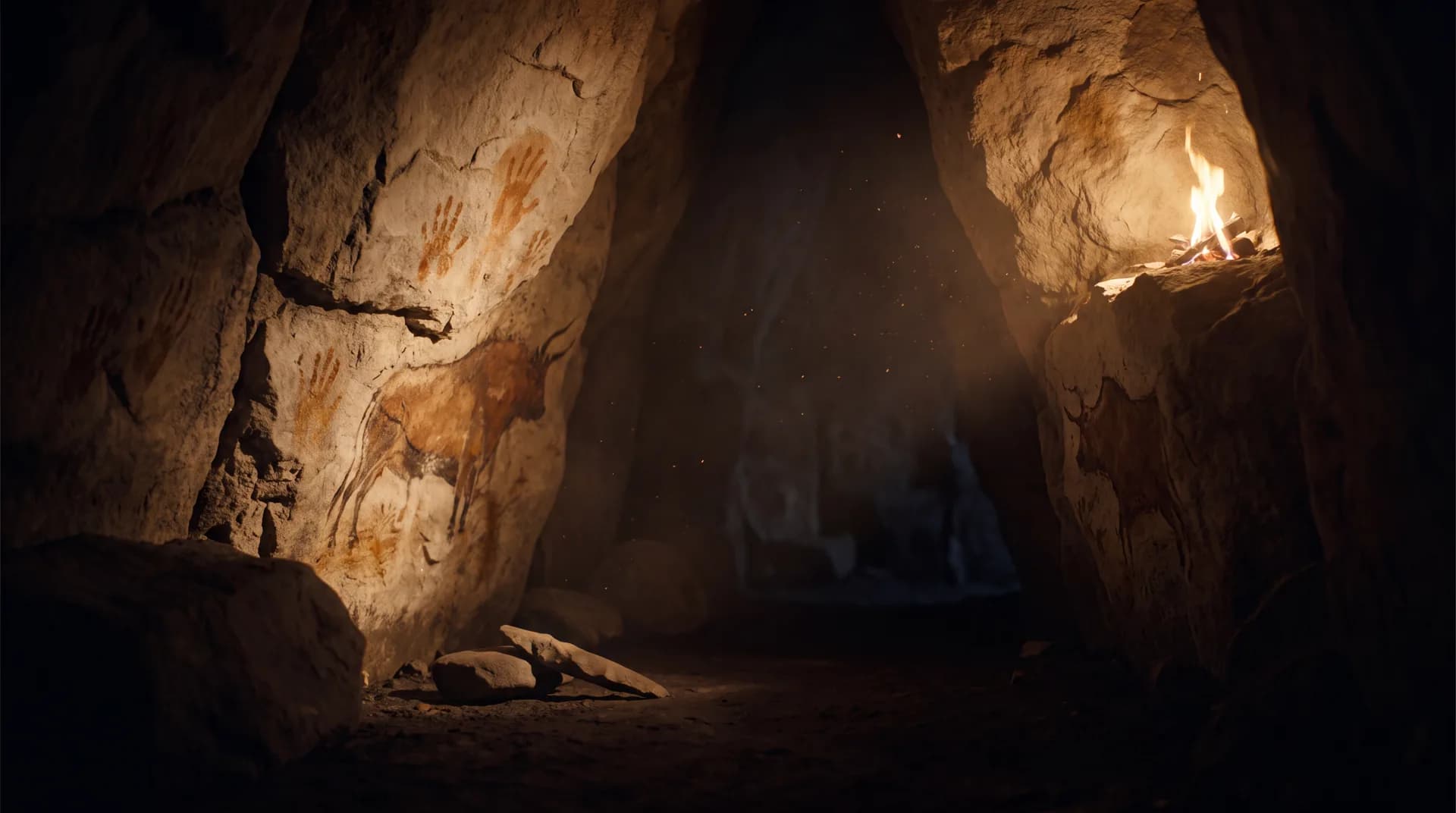
  2. c. 40,000 BCE

    The walls begin to speak

    Hands paint animals and signs deep in caves: the first images.

  3. c. 12,000 BCE

    The dead are honoured

    Graves made with care show humans thinking beyond a single life.

  4. c. 10,000 BCE

    The wild is tamed

    Humans stop chasing food and begin growing it.

  5. c. 8,000 BCE

    The first walls rise

    People settle in one place, and the village is born.
// THE ERAS

02 / 11

Ancient Civilizations

c. 3000–1200 BCE

  1. c. 3500 BCE

    The wheel turns

    A simple circle remakes how humans move and build.

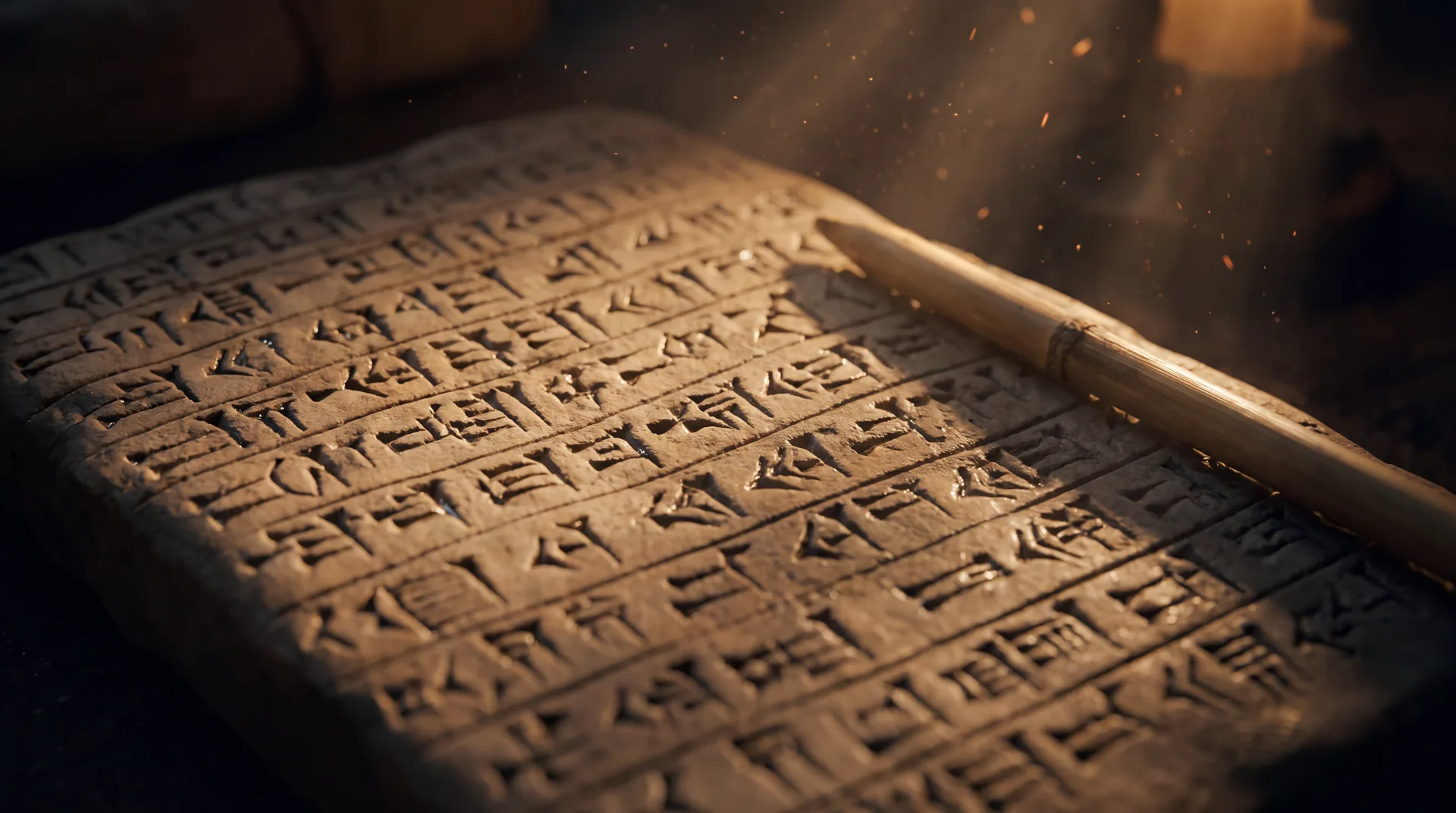
  2. c. 3200 BCE

    Thought learns to survive death

    Writing captures words that can outlive their speakers.

  3. c. 3100 BCE

    Cities rise from the mud

    The first great cities gather thousands under one order.

  4. c. 1750 BCE

    The law is written down

    Hammurabi carves justice into stone for all to see.

  5. c. 1200 BCE

    The alphabet is born

    A handful of signs replace thousands, and writing opens to everyone.

// THE ERAS

03 / 11

Classical Age

c. 800 BCE–500 CE

  1. c. 508 BCE

    The people are given a vote

    Athens hands power, however narrowly, to its citizens.

  2. c. 300 BCE

    Reason is made a method

    Greek thinkers turn geometry and logic into systems of proof.

  3. c. 221 BCE

    An empire is unified

    China is bound into one state, one script, one road.

  4. c. 105 CE

    Paper is invented

    In Han China, a cheap surface for writing speeds the spread of knowledge.

  5. c. 476 CE

    Rome falls

    The classical world's great empire collapses, and an age ends.

// THE ERAS

04 / 11

Middle Ages

c. 500–1400 CE

  1. c. 632 CE

    A new faith spreads fast

    Islam rises and carries learning across three continents.

  2. c. 800 CE

    Knowledge is kept by hand

    Monks and scholars copy the ancient texts, line by line.

  3. c. 1088 CE

    The university is founded

    Learning gathers into lasting institutions.

  4. c. 1206 CE

    One road spans the world

    The Mongol empire links East and West along a single route.

  5. c. 1347 CE

    Plague remakes a continent

    The Black Death empties Europe and unsettles every certainty.

// THE ERAS

05 / 11

Age of Exploration

c. 1400–1600

  1. c. 1450

    The press multiplies the word

    Gutenberg's machine makes books cheap, and ideas travel fast.

  2. c. 1492

    Two worlds collide

    Ships reach the Americas, joining hemispheres long apart.

  3. c. 1498

    The sea route opens

    Da Gama sails to India, and the oceans become highways.

  4. c. 1522

    The globe is circled

    One expedition proves the world is a single connected whole.

  5. c. 1600

    Trade circles the planet

    Goods, silver, and people move along the first global networks.

// THE ERAS

06 / 11

Scientific Revolution

c. 1540–1700

  1. 1543

    The Earth is moved from the centre

    Copernicus places the sun, not us, at the middle.

  2. 1609

    The sky is brought closer

    Galileo turns a telescope upward and sees new worlds.

  3. 1620

    Knowledge demands evidence

    Bacon argues that truth must be tested, not assumed.

  4. 1687

    The universe is given laws

    Newton shows the same rules govern an apple and a planet.

  5. c. 1700

    Doubt becomes a tool

    The method of question, test, and revise takes hold.

// THE ERAS

07 / 11

Age of Revolutions

c. 1750–1850

  1. 1776

    A colony declares itself free

    The United States announces that power belongs to the people.

  2. 1789

    The old order is overthrown

    France topples its monarchy in the name of liberty.

  3. 1791

    The enslaved claim their freedom

    Haiti turns the rights of man into action.

  4. 1804

    Rights are written into law

    New legal codes spread the ideals of the age across nations.

  5. 1848

    Revolution sweeps a continent

    Across Europe, people rise demanding voice and dignity.

// THE ERAS

08 / 11

Industrial Revolution

c. 1760–1900

  1. 1769

    Steam is put to work

    Watt's engine replaces muscle with machine.

  2. 1804

    Iron rails carry the future

    The locomotive shrinks distance and remakes trade.

  3. 1844

    Words travel at the speed of light

    The telegraph sends messages faster than any horse.

  4. 1879

    Night is turned to day

    Electric light frees work and life from the sun.

  5. c. 1900

    The city becomes the world

    Millions leave the land for factories and crowded streets.

// THE ERAS

09 / 11

World Wars Era

1914–1945

  1. 1914

    The world goes to war

    An old order of empires marches into catastrophe.

  2. 1918

    Empires fall

    The first great war redraws the map and ends dynasties.

  3. 1929

    The economy collapses

    A global depression shows how connected, and fragile, the world had become.

  4. 1939

    War returns, worse

    The second great war engulfs the planet.

  5. 1945

    The atom is unleashed

    A single weapon ends the war and redefines power.

// THE ERAS

10 / 11

Cold War Era

1947–1991

  1. 1947

    The world splits in two

    Two superpowers divide the globe into rival camps.

  2. 1957

    The space age begins

    Sputnik lifts the contest beyond the Earth.

  3. 1969

    Humans walk on the moon

    The farthest journey yet shows what rivalry and cooperation can achieve.

  4. 1989

    The wall comes down

    Berlin's barrier falls, and a divided world begins to rejoin.

  5. 1991

    One era closes

    The Cold War ends, and a single connected world emerges.

// THE ERAS

11 / 11

Globalization & Information Age

1991–present

  1. 1991

    The web is opened to all

    A network of documents becomes the public internet.

  2. 1998

    The world's knowledge becomes searchable

    Information turns instant, vast, and within reach.

  3. 2007

    The world fits in a pocket

    The smartphone puts the whole network in every hand.

  4. c. 2010

    Memory moves to the cloud

    What we know is stored beyond ourselves, everywhere at once.

  5. 2023

    The tools begin to think with us

    Machines become a new way to hold and use what we know.

The Compass

Knowledge endures only when someone keeps it.

From the first fire to the cloud, the question has never changed: what deserves to survive us, and who will carry it forward? That choice — made again in every age — is the harvest.